How to Build a Commercial Empire?
I had no idea about “business” at all before I became a commerce student at Dawson College, although I’m a child of a businessman. In the past 20 years I never had a long conversation with my father. He usually came home from his office before dawn. I remember that when I was a middle school student in China, on one morning at 7:30 AM, I was about to go to school. Then I heard the sound of the key in the lock and a cough–my dad came home. He usually slept when I was at school and when I came home after school, he was ready to have dinner with his business partners. Year by year, I talked less and less with my dad. But it’s interesting that I chose to study commerce because of his suggestion. He was the primary influencer for me to make this decision.
I clearly remember that my father liked to tell me his childhood story to stimulate me to study harder. He told me that my grandparents used to live in a village and the family was really poor. Sometimes, there were only a few grains of rice in the congee. My father is the eldest son who started to do business after college, because he had to earn money for his brothers and sister to go to school. He always liked to mention the Chinese old saying to me, “you can’t have a noble child from a humble family”, which means that it’s extremely difficult for a child from a poor family to become a member of the upper class in the future. When I recall of it, I really admire my father because his business is “self-made” from zero.
More than a half of the business owners in the world are “self-made”. As shown in the investigation, in 2019, 55.8% of the 2604 billionaires in the world are self-made (Clifford, CNBC). The US and China are the two countries that have the most billionaires and millionaires in the world. We know that it’s extremely difficult for people to start their own business from zero, and it’s complicated to operate it. So, what makes someone become a “self-made” business person?
“Self-made” means someone gains wealth by starting their own business, instead of inheriting fortune from others. Let’s look at a controversial example of the “self-made”. In 2018, Kylie Jenner was nominated “the youngest self-made billionaire” by Forbes. At the beginning, I believe that some of you would feel confused about this nomination. When I read this news I felt like there are question marks floating over my head, and a puzzled look stuck to my face until I finished reading the report, just like this:

Her family is globally famous, with that fame the Jenner-Kardashian family has built an empire of wealth. But why could she be an appropriate candidate on Forbes’ the list of the “self-made”?
Before Kylie founded her cosmetic company, she already had millions of fans on social media. This is an effective accumulation of customers at the early stage. An online celebrity with a huge fans base is usually easier to get support from the fans when they start to sell some products. Kylie was not satisfied with her lips so she liked to use lip liners to make her lips look bigger. Her lips size got more attentions from the paparazzi. Being on the covers of the gossip magazines is the process of drawing attention. Later, #Kylie Jenner Lip Challenge# became popular among the teenagers on social medias. Kylie may have spotted a business opportunity, so “she used $250,000 of her earnings from modeling gigs to pay an outside company to produce the first 15,000 lip kits” (Forbes). Posting the coming-soon lip kits on Instagram is the easiest way for her to advertise. As simple as you posting your photos of your vacation on Instagram. Her lip kits are not very expensive. She has drawn so many attentions with her lips. There should be many girls who are interested and curious about her products. As expected, once the kits put on sale, they were sold out in one minute.
Let’s briefly conclude the process. This is the process of accumulating customer resources. Kylie builds a brand image with her lips. For product marketing, she uses a low-cost advertisement to attract people’s curiosity and enthusiasm. The easy final step is to launch her products. Kylie definitely got advice from her mother. But the money to produce the lip kits was hers, and from the beginning to the end this process goes on with her name, Kylie Jenner.
Nowadays, although it’s risky because not all of us are Kylie Jenner, many people are trying to start up a business. It’s like the competition of the capital and market share. To make the product or services takes more parts of the market; to win the trust of the customers and attract more; to get profit from the business. If one wins, there may be more zeros added to the right side of the numbers in the bank account. If one loses heavily, the financial situation will likely to be a minus. The success in business is not easy to achieve, but we can at least learn something from those who are successful.
Oswald Mhlanga’s research paper, “Identification of personality traits affecting entrepreneurial performance in the hospitality subsector: A five-factor personality model”, studies some traits of entrepreneurs. Functional convergence and intuitive decision-making are the important features on a successful business person. This research includes the study of extraversion, conscientiousness, openness to experience, agreeableness and neuroticism, these traits form a 5-factor personality model that measures the traits of an entrepreneur (Oswald, 2). I think these 5 traits cover the personality effects on the way entrepreneurs operate business in various aspects.
First of all, extraversion means good skills of sociability, talkativeness, assertiveness and ambition (Oswald, 2). It is always essential to expand your social network when you own a business, it’s like a spider web that reaches different end points to make a stable place waiting for the coming of the food. The endpoints are the people you know. With your cooperation with them, the nutritions that make your stronger will be the new resources, new market and capitals. I interviewed my father’s friend, Mr.Chen who also owns a business. He said that, “the more friends you have, the less problems you need to worry about” (Chen). Developing good interpersonal skills will benefits a lot. The strong connections with different people will make you be in the lead of getting fresh commercial resources and not be bothered by some unnecessary troubles in business.
The second trait is agreeableness, which is the positive trait that works well in interpersonal communication, including “being courteous, exible, trusting, good-natured, cooperative, forgiving, soft-hearted and tolerant” (Oswald, 2). Although the findings of this paper shows that this traits doesn’t play important role in entrepreneurial performances, I still believe that this trait is the extension of “extraversion”. These are the specific features of a good skill of sociability. Everybody likes to communicate with a gentle person, it’s the magic to attract new friends. Everyone meets someone that is agreeable in life. When you talk to them, the feeling is like a breath of fresh air, which makes you discard the heaviness of the stress that twists your mind. Who would refuse to work with people like this?
Third, conscientiousness describes the behaviours of planning, following rules and thinking before implement (Oswald, 2). This is the core of the leadership. Opportunity only waits for those who are fully prepared. According to Michael T Deane’s analysis in the article “Top 6 Reasons New Business Fail”, errors in business planning making are able to kill a new business. He suggests that a company should determine: the business goal, the method to achieve the goal, potential problems and the solutions, cost and timetable. The whole planned should be implemented seriously once it’s decided, try to avoid big troubles and fix every problem in time. It represents failure if you change it, because the following modifications cost more time and money. If the changes unfortunately happened, the leader should find out the problem and fix in short time, then follow the new plan. “The more mistakes you make, the more expensive your business will become and the greater the chance of failure.” (Deane, Investopedia).

Fourth, openness to experience is to have positive attitude toward the imaginative, innovative and creative ideas and experience (Oswald, 2). The market is extremely competitive with high “morality”, every company never stops to seize market share as much as possible. The percentage of small business’ failure rate grows as time goes on.“Approximately 20% of new businesses fail during the first two years of being open, 45% failed during the first five years, 65% during the first 10 years. Only 25% of new businesses make it to 15 years or more” (Deane, Investopedia). Also, according to Deane, one of the major problems that cause the failure of new business is that they don’t investigate the market. He indicates that an enterprise should find an unmet need and fill it. It’s not effective to create something that is not that useful to the people and push the product or service in front of them and convince them to pay the unnecessary money (Deane, Investopedia). People’s need and want form a market, it’s easier to fill it than creating a new market. The creativity is your effective tool to compete with others in the same market segment. A business stands more stably when it has excellent creativity to draw attention and be popular among its target consumers.
Finally, neuroticism. It is the “darkness” and “contrary feelings” of the personality, such as anxiety, worries, anger, depression, etc (Oswald, 2). Neuroticism has negative impacts on the development of a enterprise. Because bad emotions influence a leader making a decision, especially in those cases that the enterprise is facing difficulty. Every wrong decision could be lethal to it. In the end, the result shows that people who are influenced by these negative emotions tend to be passive in business operation (Oswald, 2). A good leader should be able to minimize the impact of emotions.
Up till now, I bet that you’ve been evaluating yourself whether you have the traits to be a good business person. Then you may come up with a new question, “which field can I step into and start a business?” This is a broad topic and I’m afraid that I can’t list every available choice for you. However, where there is a need, there is a market. The products and services in the markets are here to satisfy the needs and wants in people’s life. A business provides its goods or services either for people to live in a better life, or to promote the production of another company’s products. Business and consumers form a line. Material supply, production process, product delivery and the retailers are the stops in this line. When you own a company, it can be a seller and buyer at the same time. It seems the market is the ocean, various business types are the fish, the sand, the sea weeds…although they are different, they are parts of the ocean.
Schools can help you navigate this ocean. It’s necessary to study entrepreneurial concepts when you are still at school because you can’t guarantee that you are a rare commercial talent. Marta Machín-Martínez and Carmen de-Pablos-Heredero are from Universidad Rey Juan Carlos in Madrid, Spain. In their paper “Innovating And Entrepreneurial Initiatives: Some Cases of Success”. They analyze the development of some successful new companies, whose business scope covers travel planning (Waynabox), veterinarians consultation service (Barbiku), hotel service (LockUp), delivery and private chauffeur (Uber) , etc. The finding shows that it’s necessary to apply new internet technology to the business. Outstanding services, competitive prices, creative strategies and clear target market are the key factors that them achieve their goals successfully as well. They list the development of the business year by year, also introduce some problems and loss, and how they overcome. At the end they suggest that although students should have master the entrepreneurial concepts at schools, sometimes it’s inevitable to fail, but “the key thing for an entrepreneur is to be able to overcome difficulties, face problems, and keep on going on” (Martínez & Herder, 156).
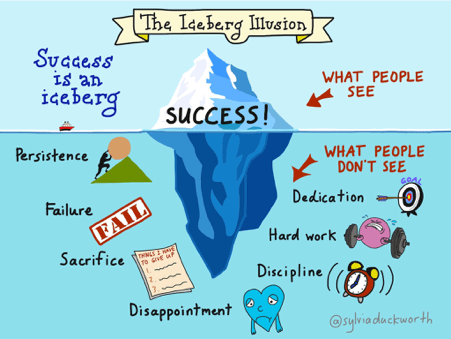
When people see the word, “self-made”, the first related word they come up with might be “rich”. However, there are lots of invisible factors contribute to the success of an entrepreneur. “Self-made” means the process of accumulation. Building a bridge between the consumers and the product/service they need is the simplest description of the entrepreneur’s career. They have commercial senses to find out the flaw of a market and fulfill it; their personalities affect the way they operate business positively; they’re not afraid of facing the problems. I always believe that the Chinese old saying which my father used to tell me can be applied to most people in this world of limited resources. But I also firmly believe that the children from the “humble families” can make themselves a nobility.
 Yifei Chen-Nonfiction writing